Skip to content
🚛 Flat Rate Shipping $17.95+ GST For Metro & standard delivery zones! Excludes remote/regional and high-cost postcodes (including parts of QLD, WA, NT & TAS), and bulky or heavy items. Online only. Learn More
11

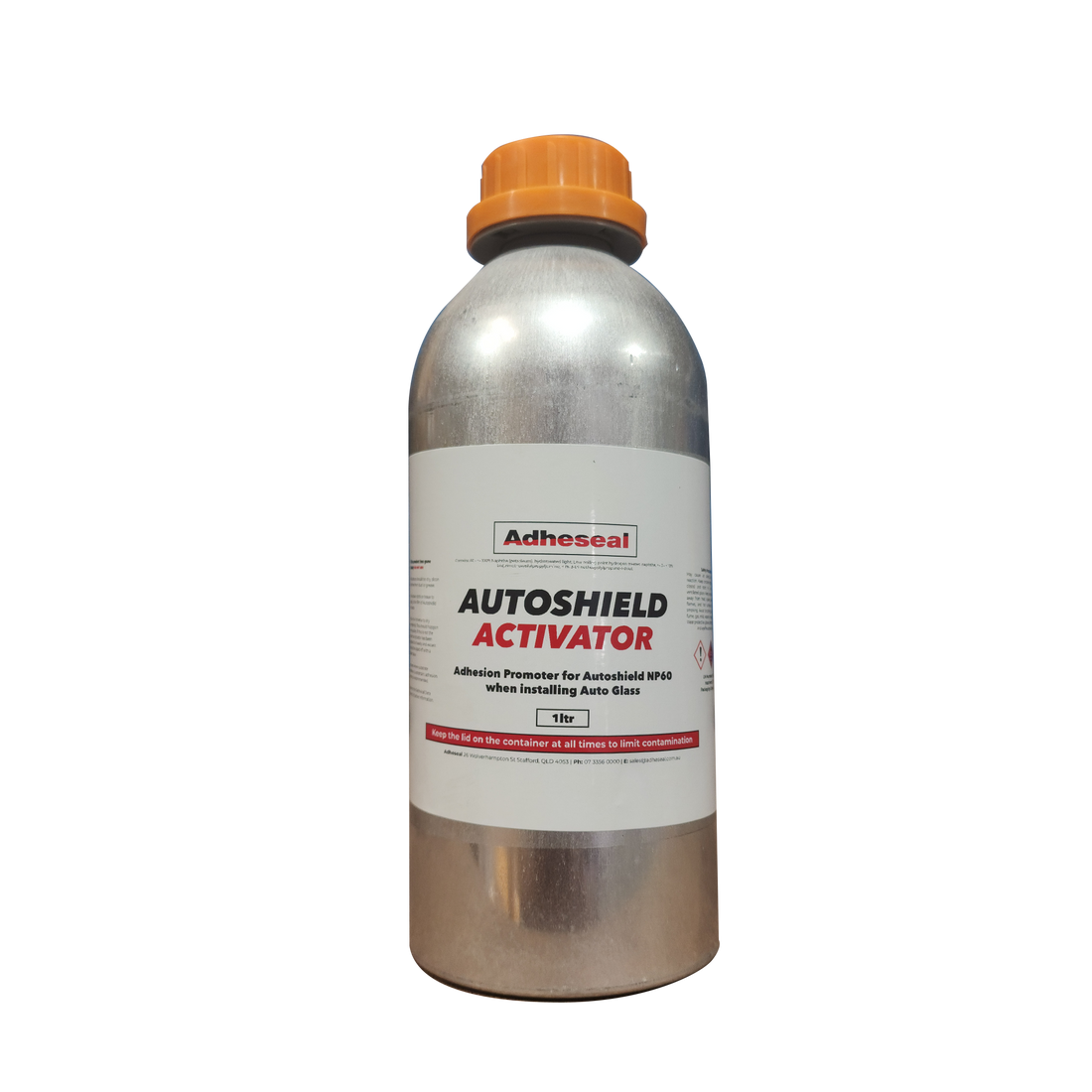
Adheseal Autoshield Activator

Autoshield Activator AP1001 chemically activates smooth glass and lacquer so PU adhesives actually grab and hold. Without it, you're chasing callbacks on windscreen installs and direct-glazing jobs where the substrate won't play nice. Clear finish means no visible lines on glass. Works from +5°C to +40°C, so it handles most Aussie workshop conditions.
Vendor: Adheseal
SKU: PRIMEAUTOA/1
Availability: In Stock
$48.66
$48.66
Prices do not include GST
Shipping & Delivery

Flat-rate shipping $17.95 + GST (metro and standard zones). Excludes remote/regional/high-cost postcodes and certain items (DG, oversized, long-length, or bagged products 15 kg+). If your order includes any of these, we will contact you to arrange additional freight charges. Online purchases only.

Reliable adhesion of polyurethane (PU) adhesives to smooth glass and lacquer demands the right preparation. Without it, you chase callbacks and risk bond failure on critical automotive and industrial applications. Autoshield Activator AP1001 provides the chemical activation needed for strong, lasting adhesion where it matters most. It ensures your PU adhesive grabs hard and holds fast.

Why this product exists

Autoshield Activator AP1001 is not a general primer. It is an adhesion promoter specifically formulated to chemically activate non-porous glass and lacquer surfaces for optimal bonding with polyurethane (PU) adhesives. This targeted formulation prevents common adhesion failures on smooth, often challenging substrates, ensuring the full performance of your chosen PU adhesive system. It's the critical first step in a reliable direct-glazing sequence.

The numbers that matter

The activator’s clear colour ensures no visible lines or discoloration, critical for transparent substrates like glass. An application temperature range of +5°C to +40°C provides a broad working window, accommodating diverse Australian climates and workshop conditions. With an 18-month shelf life, the product maintains potency when stored correctly, ensuring consistent performance for scheduled projects.

What it's like to use

Start with a dry, clean surface, free from dust or grease. Apply Autoshield Activator AP1001 sparingly with a clean applicator or rag, wiping the surface effectively. Work only in well-ventilated areas due to its solvent base. Do not expose treated surfaces to thermal, mechanical, or chemical influences before the activator is completely dry. For tool cleaning, use a suitable solvent or alcohol while the product is still wet.

Where this product excels

Autoshield Activator AP1001 is engineered for demanding adhesion scenarios:

  • Windscreen Installation: Promotes a strong, reliable bond for PU adhesives on automotive glass, reducing delamination risks in direct-glazing applications.
  • Pre-treatment for Lacquered Panels: Improves bonding performance on painted or lacquered vehicle panels without damaging finishes, crucial for vehicle repair and body shops.
  • Signage and Composite Panels: Ensures secure PU adhesive bonding on glass-lined signage and smooth composite panels used in commercial fit-outs and display work.
  • High-Humidity Environments: Its fast-drying characteristics support effective application even in moisture-prone conditions, maintaining productivity in coastal or high-humidity workshops.

How it fits in a real system

Autoshield Activator AP1001 is the mandatory first step in the Adheseal Autoshield direct-glazing system. It prepares the surface for the subsequent adhesion layers. The sequence is critical for guaranteed performance: first, activate glass and lacquer with this product; second, apply Autoshield GB Primer as a thin linking film; and finally, apply Adheseal NP-60 Autoshield polyurethane adhesive.

Choose this when

  • When bonding polyurethane adhesives: Specifically when your adhesive is a PU formulation and requires enhanced adhesion.
  • When working with glass or lacquer: For reliable, long-term adhesion to these smooth, non-porous surfaces.
  • When installing automotive windscreens: As the first step in the Autoshield direct-glazing system for vehicle glass.
  • When surface activation is critical: To ensure the strongest possible bond on challenging painted or coated substrates.

Don't use this when

  • Not for: Use if the contents appear milky. This indicates water absorption, rendering the activator ineffective. Dispose of the product.
  • Not for: Unventilated spaces. The solvent-based formulation requires good airflow to ensure user safety and proper evaporation.
  • Not for: Immediate stress exposure. Do not expose the activated surface to thermal, mechanical, or chemical influences before it is completely dry.
  • Not for: Porous substrates like concrete or brick. For these, use a dedicated porous primer like Adheseal Primer 2001.
  • Not for: General non-porous metal surfaces requiring a different type of surface preparation. Consider Adheseal Primer 50A for those applications.

This product is classified as a hazardous chemical and dangerous good according to Work Safe Australia. Always consult the Safety Data Sheet (SDS) before use for comprehensive information on safe handling, personal protective equipment (PPE), and first aid procedures. Ensure adequate ventilation during application to mitigate health risks.

Frequently asked questions

Why use Autoshield Activator with polyurethane adhesives?

Autoshield Activator AP1001 is an adhesion promoter specifically designed to chemically enhance the bond of polyurethane (PU) adhesives to critical surfaces like glass and lacquer. This prevents bond failure and ensures long-term adhesion stability, crucial for applications like automotive glazing.

Can Autoshield Activator be used on any surface?

No. This activator is formulated for use only on glass, lacquer, and specified non-porous surfaces when preparing for polyurethane adhesive application. Always confirm suitability for your specific substrate by performing adhesion tests.

What does a milky appearance in the activator mean?

A milky appearance indicates water absorption into the product, rendering it unusable. The activator must be clear to be effective. Dispose of any milky product and use a fresh, clear batch to ensure proper adhesion promotion.

How much activator should I apply to a surface?

Apply Autoshield Activator AP1001 very sparingly using a clean applicator or rag. Over-application can negatively impact adhesion or cure of the subsequent adhesive. A thin, even wipe is sufficient.

Applications and benefits

Where Autoshield Activator AP1001 is used, what it delivers, and who uses it
Application Key benefit Primary trades
Pre-treatment for PU adhesive to glass Ensures reliable chemical bond, preventing premature adhesive failure on critical glass installations. Automotive glaziers, marine fabricators, building facade installers
Surface preparation for PU adhesive to lacquer Enhances adhesion to lacquered surfaces, providing a durable and robust bond for long-term performance. Automotive body repair, industrial manufacturers
Adhesion promotion on non-porous surfaces Facilitates strong, lasting adhesion of PU adhesives to various non-porous substrates where mechanical keying is limited. General construction, industrial assembly

Applying Autoshield Activator: Enhanced Protocols & Best Practices

  1. 1. Prepare the Surface

    Ensure all surfaces are clean, dry, and free from contaminants such as grease, dust, or release agents before applying Autoshield Activator.

    Method A: Glass Cleaner

    Use an approved automotive glass cleaner to remove dirt and oils from the surface. Dry with a clean lint-free cloth.

    Method B: Solvent Wipe

    Use isopropyl alcohol (IPA) or an appropriate solvent to degrease the surface if heavy contamination is present. Allow to dry fully before proceeding.

    Timing: Allow surface to air dry completely before application.
    Pro Tip: Do not apply the activator on visibly wet or dusty surfaces — moisture will reduce adhesion strength.
  2. 2. Apply Autoshield Activator

    Apply a small amount of activator to a clean, dry, lint-free cloth or tissue and gently wipe the bonding area in one direction.

    Method A: Manual Wipe

    Use circular or linear motion with a fresh cloth for each application to avoid contamination.

    Method B: Single-Use Tissue

    Use a single-use paper tissue for small applications to maintain hygiene and control dosage.

    Timing: Wipe gently and avoid reapplying over the same area.
    Pro Tip: Apply sparingly. Excess activator may leave residue that affects bonding strength.
  3. 3. Allow Full Evaporation

    Let the surface flash off completely before applying any adhesive. Do not bond while the surface is still wet with activator.

    Passive Drying

    Leave treated surface exposed to ambient air. Full evaporation typically occurs in under 5 minutes depending on conditions.

    Timing: Wait 3–5 minutes before applying adhesive.
    Pro Tip: Never use heat to speed up drying — this may degrade the active bonding agents.
  4. 4. Apply PU Adhesive

    Once the activator has fully evaporated, apply the compatible polyurethane adhesive according to its own application guidelines. Proceed with assembly or installation.

    Compatible Systems

    Autoshield Activator is designed for use with Adheseal’s full range of windscreen adhesives and PU-based sealants.

    Timing: Adhesive should be applied immediately after activator drying for best bonding.
    Pro Tip: Do not delay bonding after surface prep — prolonged exposure can allow dust or vapour contamination to interfere with adhesion.

Product limitations

  • Not for: Use if the contents are milky. This indicates water absorption and the product will not perform as intended. Dispose of it safely.
  • Avoid: Exposing the treated surface to thermal, mechanical, or chemical influences before the activator is completely dry.
  • Ventilation: Use only in well-ventilated areas.
  • Adhesion: Always conduct adhesion tests on specific substrates prior to full application to confirm suitability.

Safety and handling

Danger

Autoshield Activator is a hazardous chemical. Read the SDS before use. It is a highly flammable liquid and vapour (H225). Harmful if swallowed (H302), causes skin irritation (H315), and may cause an allergic skin reaction (H317). Toxic to aquatic life with long-lasting effects (H411). Repeated exposure may cause skin dryness or cracking (AUH066).

Personal protective equipment

Wear safety shoes, protective gloves (nitrile rubber recommended for intermittent contact), apron, chemical goggles, eye/face protection, and a suitable respirator. Ensure adequate ventilation is available.

Ventilation

Use only outdoors or in a well-ventilated area. Ensure local exhaust ventilation is sufficient to maintain air concentrations below occupational exposure standards. Avoid breathing fumes, gas, mist, vapours, or spray.

First aid

  • Inhalation: Remove person to fresh air and keep comfortable for breathing. Seek immediate medical treatment.
  • Skin contact: Remove contaminated clothing immediately and wash skin thoroughly with water, then soap if available. Wash contaminated clothing before reuse.
  • Eye contact: Rinse cautiously with water for several minutes. Remove contact lenses if present and easy to do. Continue rinsing for at least 15 minutes. Seek medical advice.
  • Ingestion: IF SWALLOWED: Rinse mouth. Do NOT induce vomiting. If vomiting occurs spontaneously, keep head below hips to prevent aspiration. Seek immediate medical treatment.

Storage and disposal

Store in a cool, dry, well-ventilated place, out of direct sunlight, and away from foodstuffs, heat, and ignition sources. Keep containers tightly closed and upright. Autoshield Activator is a Class 3 Flammable Liquid and a Schedule 5 poison; store and handle according to relevant regulations. Dispose of contents and containers in accordance with local, regional, national, and international regulations.

Substrate guide

Proper surface preparation is critical for establishing a strong, durable bond with polyurethane adhesives.

Glass

Surface prep: Ensure surfaces are dry, clean, and free from dust or grease. Mechanical cleaning or chemical pre-treatment may be necessary depending on contamination.

Primer: Required. Autoshield Activator AP1001 enhances the chemical bond between the glass and subsequent PU adhesive layers.

Lacquer

Surface prep: All lacquer surfaces must be dry, clean, and free from dust or grease before application. Remove any loose or flaking material.

Primer: Required. Autoshield Activator AP1001 improves the adhesion of PU adhesives to lacquer, reducing the risk of delamination.

Non-porous surfaces

Surface prep: Surfaces must be dry, clean, and entirely free of dust, grease, or other contaminants. This ensures direct contact for adhesion promotion.

Primer: Required for optimal adhesion. The activator is designed to improve PU adhesive bonding on these surfaces.

Adheseal Autoshield Activator Physical Properties

Adheseal Autoshield Activator Physical Properties
Property Value
Colour Clear
Form Clear Liquid
Odour Characteristic
Density 0.80 g/cm3
Vapour Pressure (20 °C) 59 hPa
Flash Point 13 °C
Autoignition Temperature >200 °C
Viscosity 1.5 mPa.s
Solubility in Water Miscible with water
Application Temperature Between +5°C and +40°C
Shelf Life 18 months

Adheseal Autoshield Activator - Use Cases

Here are some common examples on where Adheseal Autoshield Activator used by our customers.

Auto Glass

Automotive Glass PU Adhesion

Installing new windscreens or direct-glazed automotive glass panels with polyurethane (PU) adhesive systems.

Activates glass surfaces to ensure high-strength, reliable adhesion of polyurethane adhesives, critical for structural integrity and safety.

  • enhances PU adhesion
  • glass substrate
  • Autoshield System Step 1
  • application +5°C to +40°C

Auto Glass

Activate glass for PU adhesive

When preparing windscreens or direct-glazed windows for polyurethane adhesive bonding in automotive applications.

This essential activator creates a crucial bond-promoting layer on glass and lacquer, ensuring strong adhesion for the subsequent Autoshield PU adhesive system.

  • Enhances PU adhesion to glass
  • Also for lacquer surfaces
  • Apply +5°C to +40°C
  • Clear liquid appearance

Auto Body

Lacquered Surface PU Bonding

Preparing painted or lacquered metal/composite panels for structural bonding with polyurethane (PU) adhesives.

Creates a reactive surface on lacquer, ensuring robust, long-term adhesion of PU sealants without damaging the finish.

  • enhances PU adhesion
  • lacquer substrate
  • wipe on application
  • use sparingly

Alternative Products

Need Help with Adheseal Autoshield Activator?

Need more information about this product? Hit the button below and reach out to one of our experts now.

Recently Viewed Products

Thanks for subscribing!

This email has been registered!

Shop the look
Choose Options
Edit Option
Compare
Product SKUDescription Collection Availability Product Type Other Details
this is just a warning
Login
Shopping Cart
0 items